Behind the Lens and Alone: The Hidden Emotional Cost of Working in Adult Entertainment

Photo by Photo by Cansu Sarp on Unsplash on Unsplash
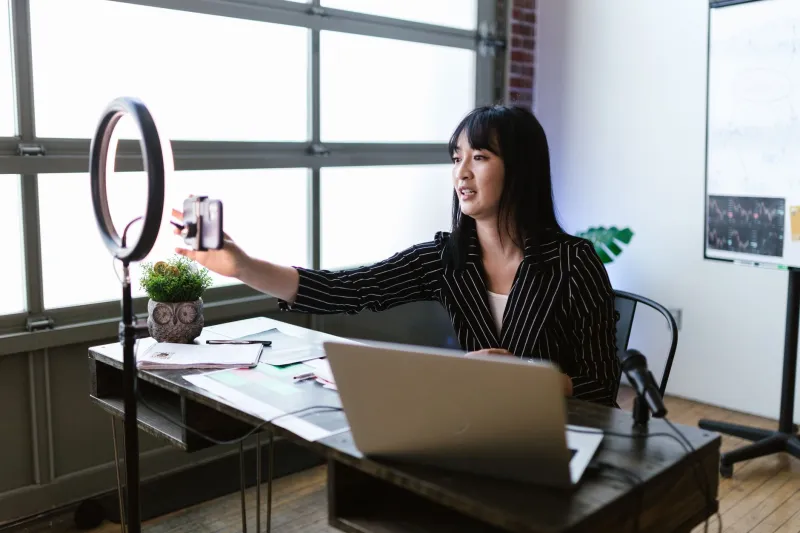
There's a particular kind of quiet that settles in after a long shoot. The ring lights are off, the camera app is closed, and the notifications from fans are already piling up — hearts, tips, comments, requests. You are, by every measurable metric, surrounded by people who want your attention. And yet, somehow, the room feels completely empty.
That paradox — hyper-visibility paired with profound isolation — is one of the least-discussed realities of life as an adult performer or creator in the United States today. While the industry has made real strides in conversations about consent, financial literacy, and body positivity, the emotional underbelly of the work remains largely in the shadows. Not because people aren't suffering, but because admitting it still feels like a professional liability.
It's time to change that conversation.
The Loneliness No One Talks About
Let's be honest: the adult industry runs on intimacy. Or at least the performance of it. Creators spend hours cultivating parasocial bonds with subscribers, building personas that feel personal and accessible, offering connection as a core part of the product. The cruel irony is that this constant performance of closeness can actually deepen the creator's own sense of disconnection.
"There's a phenomenon I see regularly with performers and creators," says one licensed therapist who works specifically with adult industry professionals and asked to remain anonymous to protect client confidentiality. "They're giving so much emotional labor — even when it's performative — that by the time they're done working, they have almost nothing left for their actual relationships. Real intimacy starts to feel like more work on top of work."
This isn't unique to adult entertainment, of course. Burnout from emotional labor affects nurses, teachers, customer service workers. But what makes the adult industry distinct is the stigma layer — the reality that most performers can't exactly call their mom and vent about a hard week at the office. Many creators operate in secret from family members, childhood friends, even neighbors. That secrecy compounds the isolation exponentially.
When Stigma Becomes a Wall
Stigma doesn't just hurt feelings. It creates structural barriers to the kinds of support most people take for granted. Think about what happens when you're having a rough time at a conventional job: you might talk to a trusted friend, see a therapist, maybe even vent to a coworker. Adult performers often can't access any of those outlets without risking exposure, judgment, or damaged relationships.
Finding a therapist who won't pathologize your career choice is harder than it sounds. Many performers report walking into sessions only to spend the entire hour defending their decision to do the work rather than actually processing their emotional experience. "I've had to essentially interview therapists before committing to sessions," shared one performer based in the Midwest who has been in the industry for four years. "I need someone who isn't going to treat my job as the problem. Sometimes the job is fine. Sometimes I'm just lonely, and I need help with that."
The search for sex-worker-affirming mental health care has led many in the community toward specialized providers, peer support networks, and online communities built specifically for industry workers. Organizations like the Sex Workers Outreach Project (SWOP) and various regional advocacy groups have worked to connect performers with mental health resources that actually meet them where they are — but demand consistently outpaces availability.
Building Real Community in a Transactional World
Here's the thing about the adult entertainment community: when it shows up for itself, it shows up hard. Performers looking for genuine peer connection have increasingly turned toward private Discord servers, regional meetups, and industry-specific social spaces where they can speak freely without performing for an audience.
These spaces matter more than they might seem from the outside. For a lot of creators, especially those who are newer to the industry or who work solo from home, a private group chat with other performers is the closest thing they have to a break room — a place to decompress, complain, celebrate, and just be a normal human being who happens to have a very unusual job.
"Community saved me, genuinely," said one creator who's been producing content for three years and recently started moderating a private support group for other performers. "When I was new, I thought everyone else had it figured out. I felt so isolated. Finding people who got it — not fans, not family, but actual peers — was the thing that made me feel like I could keep doing this sustainably."
Larger platforms have also started paying attention. Some content platforms have introduced creator forums and community features specifically designed to facilitate peer connection rather than just content distribution. Whether those efforts are driven by genuine care or retention strategy is debatable, but the infrastructure matters regardless of the motive.
The Relationship Question
Maintaining romantic relationships while working in adult entertainment is its own complex conversation, and one that deserves more than a pat answer. Some performers are partnered with people who are fully supportive; others are single by circumstance or choice; many navigate complicated middle grounds where partners are theoretically supportive but emotionally struggle with the reality of the work.
What therapists and performers alike emphasize is that the quality of outside relationships often hinges on one thing: radical honesty. Not just about the work itself, but about what the performer actually needs emotionally. That means being able to say "I've been performing intimacy all day and I need genuine closeness tonight" without that statement being weaponized or misunderstood.
"The performers I see who maintain the healthiest relationships are the ones who've gotten really good at communicating their emotional state with specificity," the therapist noted. "Not just 'I'm tired,' but 'I'm emotionally depleted in this specific way, and here's what would actually help.' That level of self-awareness and communication is hard-won, but it makes a real difference."
Moving Forward: Destigmatizing the Ask for Help
The industry is slowly, imperfectly, moving toward a more honest reckoning with mental health. Performers are speaking more openly about therapy, about hard days, about the emotional weight of the work. That transparency has real value — it makes it easier for the next person to reach out without shame.
If you're a creator or performer reading this and any of it lands close to home, here's the straightforward truth: wanting connection isn't weakness. Feeling lonely in a crowd of fans isn't a character flaw. It's a human response to a genuinely complicated professional reality, and it deserves the same care and attention you give every other aspect of your career.
The cameras don't have to be rolling for you to matter. And the quiet after a shoot doesn't have to feel quite so empty.